.jpg)

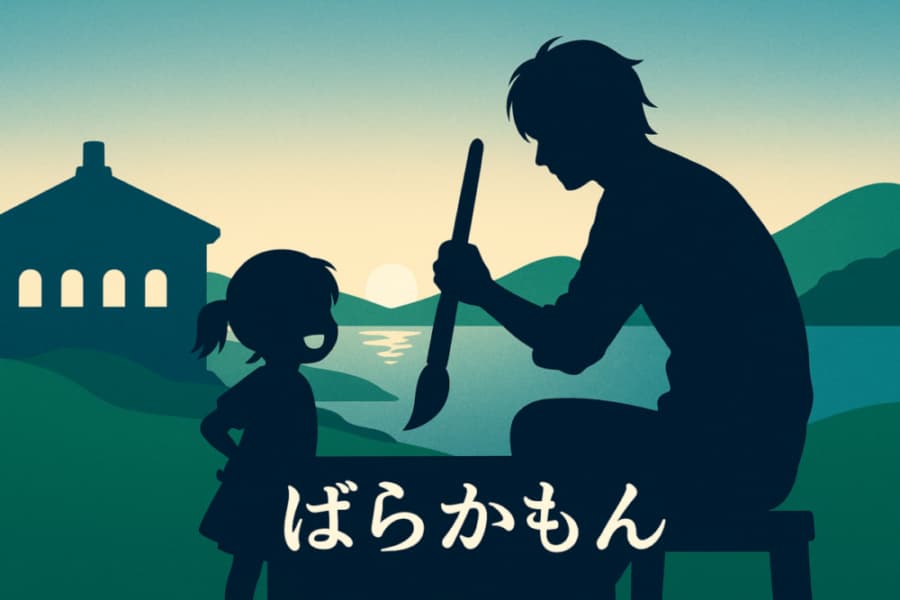
*This article contains promotional material.
*The images and quotes in this article are used for the purpose of introducing the work. Copyright belongs to the author and publisher.
basic information
- Title: "Barakamon"
- Author: Yoshino Satsuki ← Someone who throws out their love for their hometown with all their might.
- Publisher: Square Enix
- Published in: Gangan Online (2009-2018)
- Number of volumes: 18 volumes (completed)
- Genre: Slice of life comedy/human drama
- Derivative works: spin-off "Handa-kun", anime adaptation, live-action drama adaptation
Have you ever been so busy that you lost sight of who you are?
"'Barakamon' is a human drama that combines the countryside and calligraphy to gently soothe the hearts of modern people."
⇓Quote from the story. Naru's words
"You won't know until you climb it, and you won't see it unless you try to look."
"Come quickly, Sensei. We won't be able to see anything unless we get past this wall. Isn't it beautiful?"
The protagonist was struggling against the wall in front of him, and these words, along with the beautiful view of the sea, mountains, and sky of Goto that he could see at the top of the wall, enveloped his tense heart and struck a chord with the protagonist, who was struggling and suffering.
It teaches us the importance of taking on challenges.
The next word the protagonist writes is "easy." I like how the protagonist's writing expresses how relaxed and happy he felt.
You won't know until you read the article. You won't see it unless you try.
Everyone, hurry up and watch it! You won't be able to see the film unless you read this article. See, it's interesting, right?
So, I would like to convey the appeal of this work.
Fun awaited us on the other side of the wall we reached.
My calligraphy still has a long way to go.
Synopsis
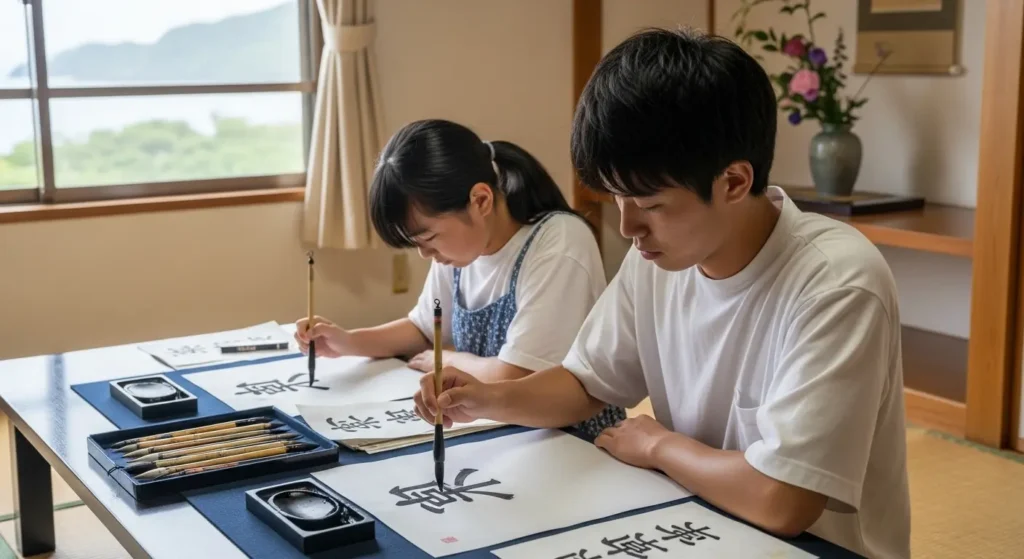
The protagonist, Seishu Handa, is a young calligrapher active in the city. At an awards ceremony, he raises his hand against a judge who harshly criticizes his work, causing a commotion. In order to calm his mind, he decides to move to a small island in the Goto Islands at the suggestion of his master.
Living on the island is a constant culture shock for someone who grew up in the city. Children barge into his house without permission, islanders with no sense of distance, and a life of living in harmony with nature. Although he is confused at first, he gradually grows as a person and as a calligrapher through his interactions with the islanders.
The story does not have any major incidents, but is told through a series of small, everyday occurrences. It is characterized by the slow flow of time in the countryside and the careful depiction of the protagonist's inner changes.
Background of the work/stage
Author Satsuki Yoshino is originally from Nagasaki Prefecture, and her work is filled with her own experiences of the Goto Islands, including their dialect, culture, personalities, and abundant seas, which she uses as a model for her work.
The word "barakamon" means "a lively child, an active child" in the local dialect.
There are also many other fascinating dialects that cannot be conveyed in standard Japanese, such as "unnya" → "no" and "mijoka" → "kawaii." I think the warmth of the islanders' personalities is the most appealing aspect of the story. There is a culture of sharing and helping each other, and people support each other within the island community. Whether they catch a fish or throw rice cakes, they share with others and share their feelings; it is wonderful to see such a culture rooted in the island.
The site's administrator, Moo, is originally from Nagasaki Prefecture and has visited the Goto Islands. It's a comfortable place where time flows slowly and gazing at the sea and mountains calms the soul.
I hope many people will go. As the setting for the work, it might be interesting to go on a pilgrimage to the various places, things, and cultures that appear in the work.
The charm of the characters
- Seishu Handa
The protagonist is a young calligrapher. Although he is only 23 years old, he has the talent to win awards for his work. He is difficult, short-tempered, and naive. When his writing is judged to be "mediocre," he punches a calligraphy expert and is exiled to an island. However, through the warm encounters and experiences he has on the island, he grows as a kind person. His coming-of-age story is the core of the work. - Koto stone
A lively girl from the island. She is cheerful and friendly, and has a great influence on Handa's heart. Her innocence and honesty shake up Handa's values as a city boy. She often makes amusing remarks and sometimes shows off her funny expressions. She is a character that reminds readers of honest feelings. - Island Residents
Fishermen, farmers, elderly people, classmates, etc. Everyone is unique and warm-hearted. Their unpretentious kindness warmly supports the story. - Kawato
He is Handa's friend and manager. He acts as a bridge between Handa and the city, and is often the source of laughter.
All the characters are life-sized and lovable. Handa's interactions with Naru, in particular, are an important element that symbolizes his change. Naru, from the title "Barakamon (Energetic Child)," symbolizes the purity, warmth, and energy of the island. In contrast, Handa, like the characters he writes, is a lost, good-natured boy who is trapped in the mold of the city. He is a character who invites the reader to think along with him as he wonders what it means to be oneself.

Junon Boy's teacher came from the city and it was fun.
Be careful not to eat too much of this stuff!
The image, atmosphere, and message of the work

The illustrations are simple and soft, and the comedy scenes often make use of deformation, creating a comfortable comedic tempo. On the other hand, the serious scenes and depictions of calligraphy works are detailed and powerful, creating a clear and sharp image.
The overall atmosphere is similar to a "slow life manga," and reading it gives you the feeling that time passes peacefully. The nature of the countryside, the ocean views, the simple smiles of the islanders... Elements of "healing" away from the hustle and bustle of the city are scattered throughout.
Through calligraphy, Handa reexamines his way of life and state of mind, focusing on "being yourself," "freedom," and "comfort" to convey to readers. This work teaches us that important things are hidden in the margins of life. The theme is one that will resonate with those who are overwhelmed by something every day and no longer have the ability to think, and those who are exhausted.

It will be~~
I'll throw lots of mochi at Naru!
Memorable scenes
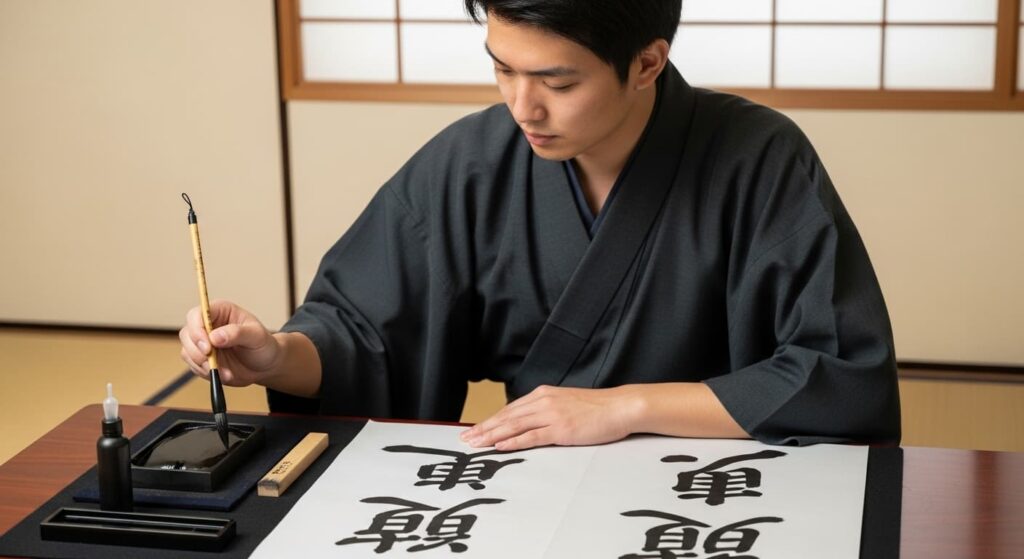
- Interaction between Handa and "Naru"
When Handa, a Junon Boy (city boy), first came to the island, he found the people around him and Naru, who was always overly involved, annoying. Handa himself strived for perfection in his calligraphy, and felt a sense of impatience and loneliness that was in proportion to his sharp talent. After coming to the island, he became immersed in the innocent warmth of the islanders. It is moving to see Handa learn from Naru the honest emotions that he would not have been able to experience in the city. His growth is reflected in his brushwork. - Completion of a calligraphy piece
The moment when Handa transformed his experiences on the island into a work of art was so powerful it gave me goosebumps. It made me realize that art is directly connected to humanity. Handa was originally a hard worker, and his talent was freely utilized in his work, which was moving and did not fit into the mold of "ordinary."
Recommended for:
- People looking for heartwarming stories of everyday life
- People who are tired of city life
- People who aspire to rural life and slow living
- People interested in art and self-expression
- People who are attracted to stories that depict interactions between children and adults
Similar works
- "Non Non Biyori":A humorous depiction of everyday life in the countryside.
- "Yotsuba&!":A daily manga that depicts the purity of children and the fun of everyday life.
- "Silver Spoon":A coming-of-age manga that depicts the growth of a boy through school life in the countryside.
- "Bakuman.": They have in common the fact that they depict the struggles and growth of young people who are dedicated to creative work.
Q&A
Q: Can I enjoy it even if I don't know much about calligraphy?
A: No problem. Although calligraphy is one of the themes, the story focuses on human drama and everyday life, so anyone can enjoy it.
Q: Should I read the spin-off "Handa-kun"?
A: I highly recommend it. It's a spin-off that depicts Handa's school days, and it has a strong comedy element, so you can enjoy the contrast with the main story.
Q: What is the difference from the live-action drama version?
A: The warmth and detailed portrayal of emotions in the manga are unique to the original work. The live-action version highlights the beauty of the natural scenery, so it's best to enjoy both.
summary
"Barakamon" is a masterpiece set on a rural island far from the city, depicting the growth of a young calligrapher and the human drama that unfolds.
Through his interactions with the children and connections with the islanders, the protagonist learns not only about art but also about the important things in life. Readers, too, will find their hearts healed and courage boosted with every turn of the page.
This is a manga that can be recommended to a wide range of generations as a "slices-of-life human drama that will make you laugh and cry."

This work focuses on the preciousness of everyday life and the glorious beauty of everyday life.
Maybe fulfilling days are somehow filled with warmth.
Overall impressions
Purchase Link


Other works by the author


Related articles
Related article: "Mountains, Appetite, and Me" - Another story of how food and nature heal the soul


Related article: "Homeless Reincarnation" - What are the common themes in stories of rebirth and rebirth?
comment